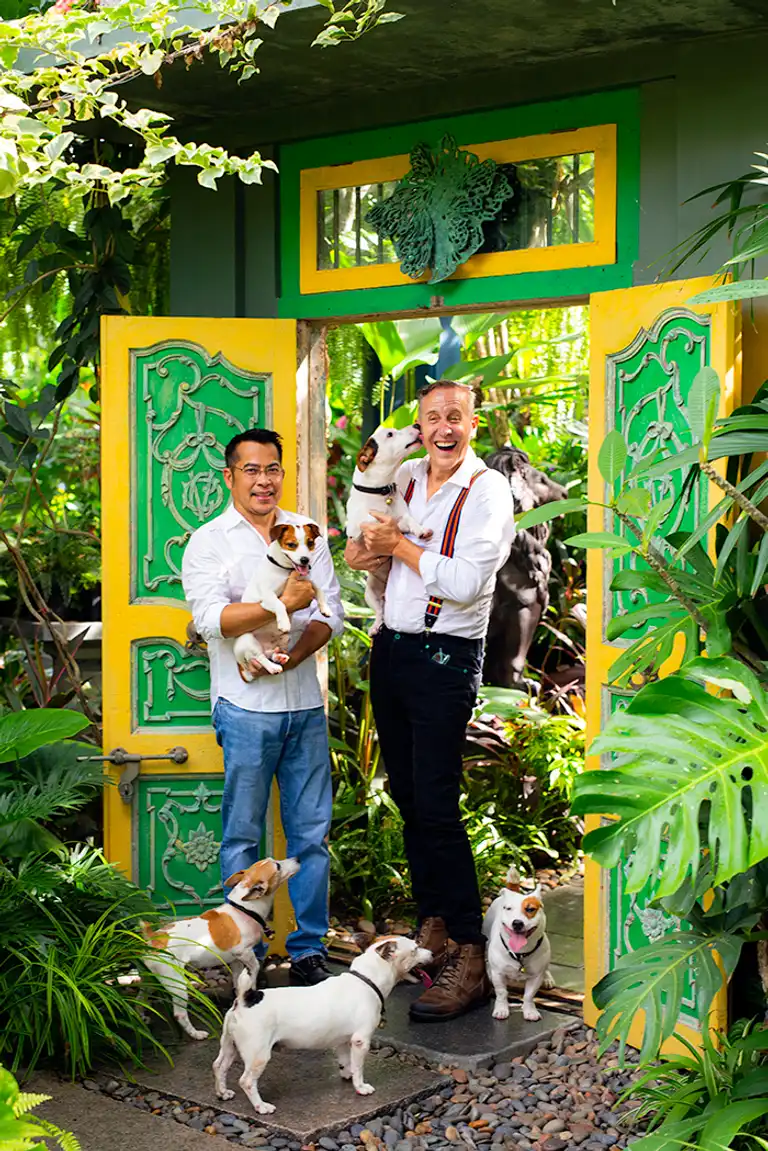
Bill Bensley arrived in Bangkok in 1989 and opened his design practice in a parking garage. “Every great enterprise needs a glamorous beginning,” he tells us. “Mine had parking.”
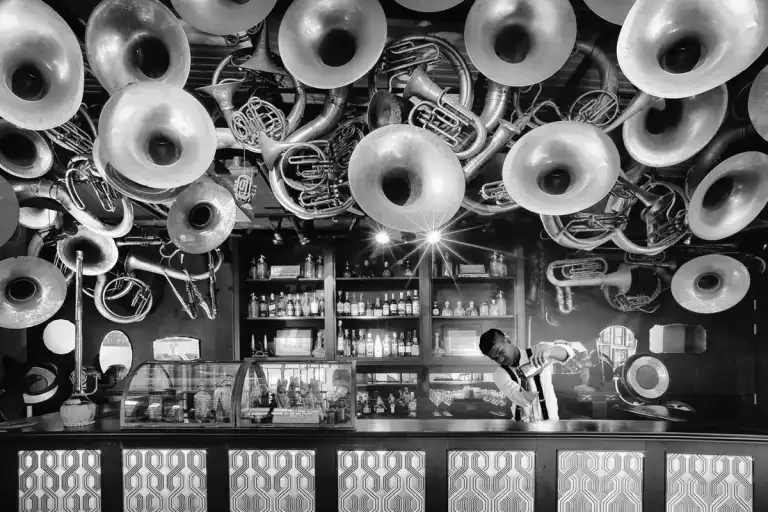
Since then, the architect, landscape designer and artist has helped create some of the world’s most imaginative hotels, including Bangkok’s The Siam, Capella Ubud in Bali and Shinta Mani Wild in Cambodia. Yet behind the extraordinary colour, theatricality and detail of his designs is an enduring fascination with the everyday: repaired chairs, ingenious market stalls, old shophouses and the craftspeople whose resourcefulness continues to inspire him.
For The Local List, Bill shares his personal Bangkok: where he rummages for objects with a previous life, the restaurants that tempt him away from dinner at home, and why the best way to get to know the city is to leave a little room for getting distracted.
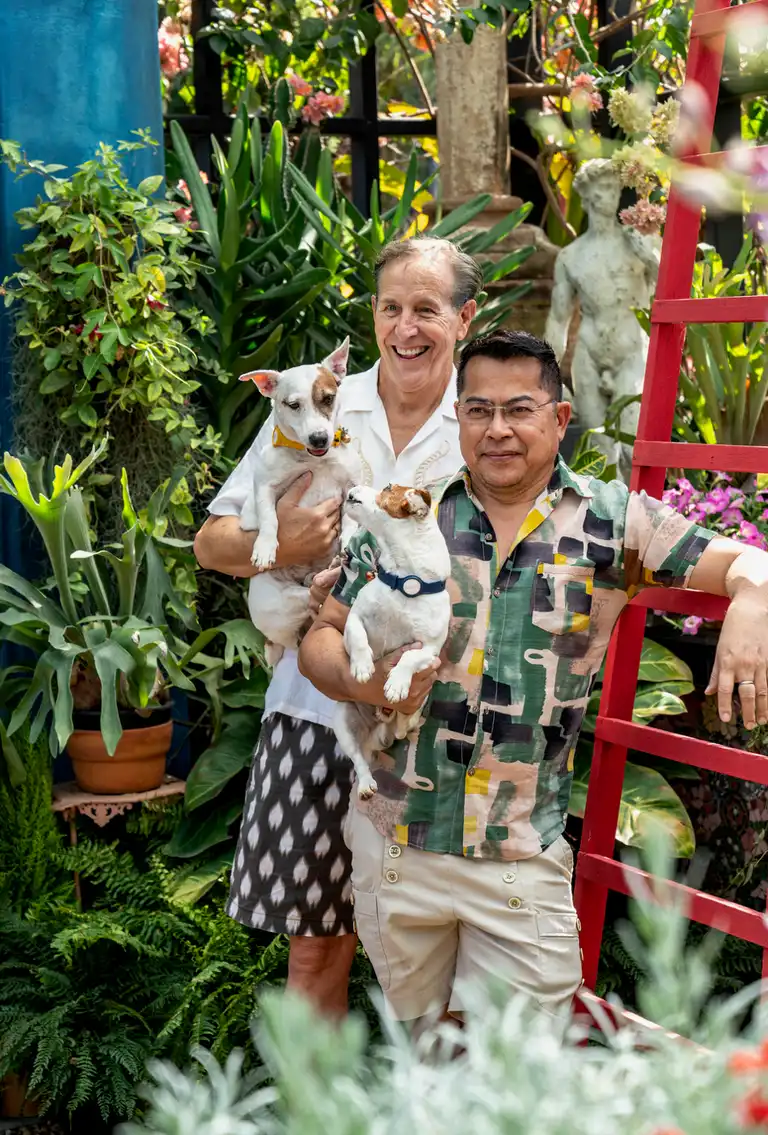
Bill Bensley
Founder & Creative Director, BENSLEY
Bill Bensley is a Bangkok-based architect, landscape architect, interior designer and artist, and the founder of BENSLEY. Known for his colourful, imaginative hotels and gardens, he combines design with a longstanding commitment to conservation and philanthropy.
TCL
You’ve called Bangkok home for decades. What first drew you to the city, and what keeps you curious about it today?
BB
I arrived in 1989 and opened my design practice in a Bangkok parking garage. Every great enterprise needs a glamorous beginning. Mine had parking.
What struck me was the extraordinary ability of the people making things here. Carvers, metalworkers, gardeners, artists; you could have an improbable idea and find someone with the skill, patience and good humour to help you realise it. For a young designer, that was intoxicating. I learnt Thai because I wanted to join the conversation properly. You miss a great deal if you can only point.
Then I met Jirachai, and Bangkok became much more than a place to work. We built a life together, a garden that has developed territorial ambitions, and a household governed by Jack Russells.
What keeps me curious is that Bangkok still refuses to be entirely understood. There is always another market stall, another extraordinary maker, another object I apparently cannot live without.
"After all these years, the city can still derail my afternoon. I consider that a virtue."
TCL
Your work is full of colour, character and unexpected details. Is there something about everyday life in Bangkok that has shaped the way you see and design?
BB
Bangkok is a very good education in looking. An old shophouse, a repaired chair, a market stall assembled with tremendous ingenuity; there are ideas everywhere. You have to pay attention.
I love the resourcefulness. Someone sees a problem, finds three unlikely materials and makes something work. There is a confidence in that which I find enormously appealing. Things needn’t be expensive to be clever or beautiful.
The humour matters, too. Speaking Thai lets me joke with people, hear their stories and understand a little more of what I’m looking at. Those exchanges feed the work as much as the architecture does.
I’m interested in the hands and minds behind an object. Who made it? Why that material? Why that pattern? That gives you somewhere to begin designing. Simply putting a Thai antique in a hotel lobby is a rather short conversation.
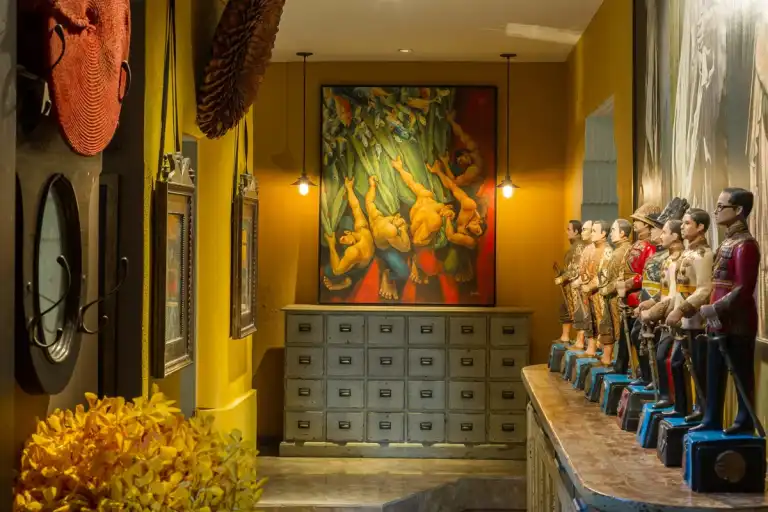
"And Bangkok has certainly never persuaded me to become a minimalist. There is far too much to look at."
TCL
When you have a rare day in Bangkok with no appointments, how do you like to spend it?
BB
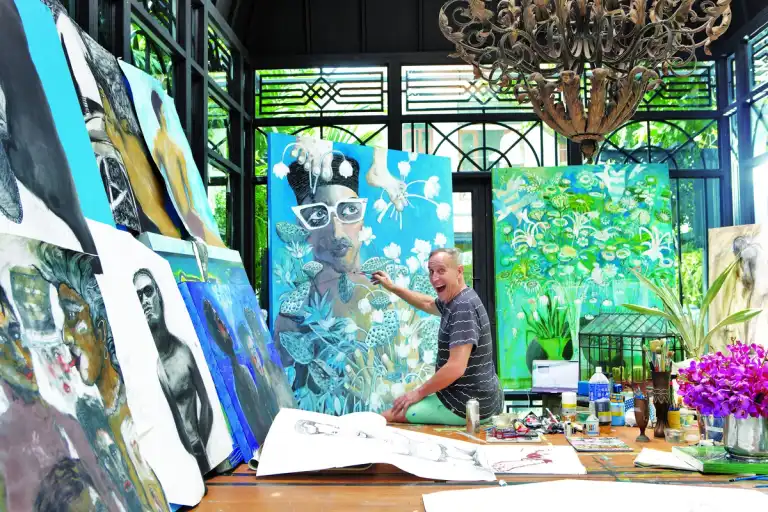
Painting. Ten hours can disappear very happily. I paint standing up, so my idea of a restful day is apparently quite exhausting.
I work at home at Baan Botanica, with the dogs nearby and Jirachai doing something to the garden or house. He might be moving plants, arranging flowers, hanging pictures or having something reupholstered. You can become quite absorbed in a painting and emerge to discover that the room has moved on without you.
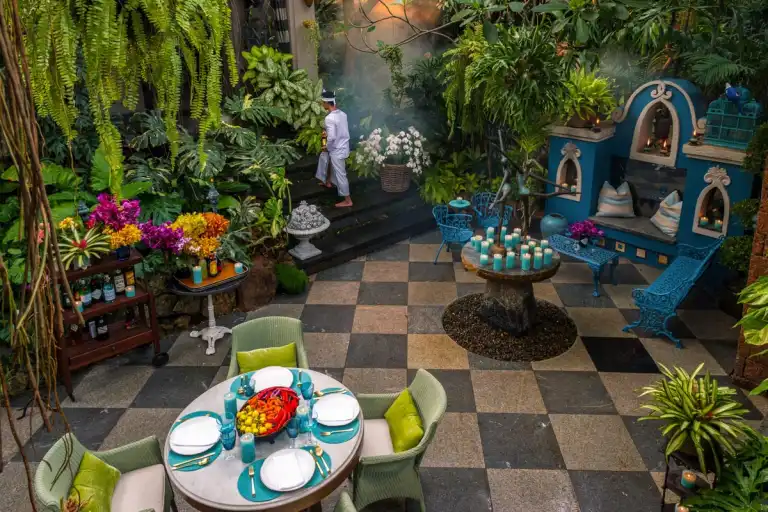
We have 17 pocket gardens, so there is always somewhere to wander and something to inspect. We both like trying ideas. If something doesn’t work, we change it. There is no need to spend six months having a committee meeting about a chair.
Then a good Thai dinner with Jirachai, perhaps friends, perhaps out in the garden. After so much travelling, having nowhere else to be is a tremendous luxury. I don’t feel the slightest obligation to improve it by going out.
TCL
Where do you go to find interesting objects, antiques, plants or work by local makers—and what draws you back to those places?
BB
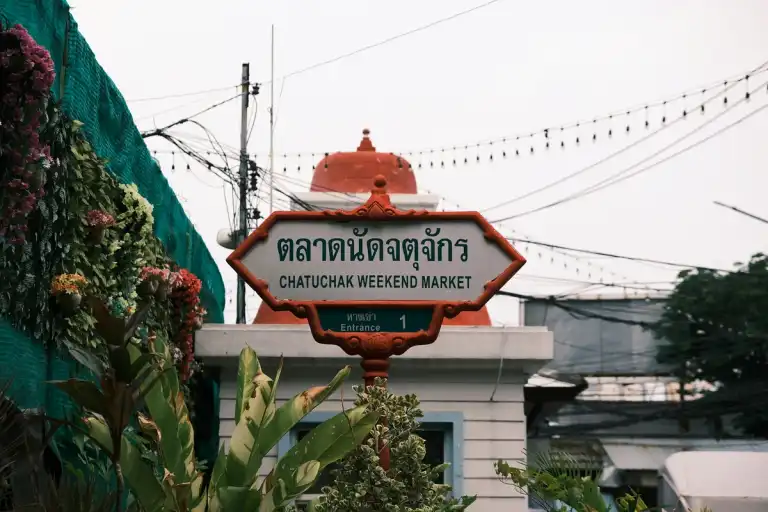
Chatuchak, especially the antiques section, and DD Mall, the big red building across the road. I have a considerable weakness for things with a previous life: furniture, paintings, peculiar objects whose original purpose may remain a matter of debate.
My shopping philosophy is “buy now, work out where it goes later”. This explains the warehouse.
I enjoy the less obvious corners of Chatuchak, where you have to rummage a little. Sampeng in Chinatown is wonderful for fabrics, and I like exploring the creative neighbourhood around the old General Post Office and the Thailand Creative and Design Centre.
But the real attraction is the possibility of finding something I wasn’t looking for. If I knew exactly what I wanted before I arrived, half the pleasure would disappear.
Sometimes an object waits years for its moment. Then the right project comes along and suddenly that ridiculous purchase looks positively farsighted. Those are very satisfying days.
"Buy now, work out where it goes later.”
TCL
Which places do you return to for food or a drink? We’d love to hear about a few favourites, from an everyday breakfast or simple lunch to somewhere you’d take a friend for a special evening.
BB
I must confess that my favourite restaurant is at home. We have two wonderful Thai chefs, Jirachai is there, and the dogs maintain a keen interest in service. It is difficult to compete.
For an easy lunch, I often order plant-based food from La Cocina. I like Baan Ice for Southern Thai cooking, Boon Tong Kiat for chicken rice, and Arunwan on Ekamai for pork noodle soup. A delicious lunch doesn’t require a chandelier. This may sound an odd admission from someone in my profession.
For a special evening, Gaggan appeals to my love of imagination and theatre. I enjoy food with an idea behind it, particularly when the idea makes me smile. EAT ME is another favourite, and I am very susceptible to the sticky date pudding.
I don’t really drink, so I’m a slightly fraudulent person to ask for a bar crawl. I would probably spend the evening examining the furniture.
TCL
Is there a garden, gallery, building or other space that you think reveals something special about Bangkok?
BB
Lhong 1919, the old Chinese-Siamese trading complex on the river. I’m drawn to its courtyards, weathered timber, brickwork and shrine. The details that tell you people have lived, worked and believed in a place for generations.
As a designer, I find that accumulated character enormously valuable. A worn surface can tell you more than a very expensive new one. Naturally, we then spend a fortune trying to persuade the new one to look worn.
Bangkok’s river buildings help you understand the city as a place of arrival and exchange. People came here, brought their skills and beliefs, traded, settled and made something together. You can feel that history in the architecture.
"I like places that reward a second look. And a third. A building needn’t explain everything the moment you walk through the door.”
TCL
As Bangkok changes, what do you most hope it holds on to—and is there anyone doing something to protect or enrich that character who you think deserves more attention?
BB
Its makers. The people who carve, weave, stitch, cast, grow, mend and invent. So much of Bangkok’s character depends on people doing things exceptionally well with their hands.
I also hope it keeps its street life, small shops and capacity for glorious surprise. I would be terribly disappointed if every interesting corner became somewhere selling the same handbag.
The people I’d like to see receive more attention are often working quietly behind the finished object. The craftsperson gets a small credit, if any; the designer gets photographed beside it. I have benefited from that arrangement, so I can hardly pretend to be innocent.
We should name the makers, pay them properly and give them interesting work. Younger people need to see that these skills can provide a future.
I depend on extraordinary craftspeople.
"A drawing can suggest all sorts of wonderful nonsense. Someone still has to know how to build it."